For ethics boards and data stewards
Note 1Each study needs its own ethics approval. Caracal holds the consent text and ethics reference the research team provides; it does not supply them.Caracal runs longitudinal diary studies: people answer a few questions on a schedule by speaking or writing in a browser. This page sets out what the platform does with consent, recordings, identity and withdrawal, so a review can weigh a study that uses it.1Note 1Each study needs its own ethics approval. Caracal holds the consent text and ethics reference the research team provides; it does not supply them.
Consent is versioned
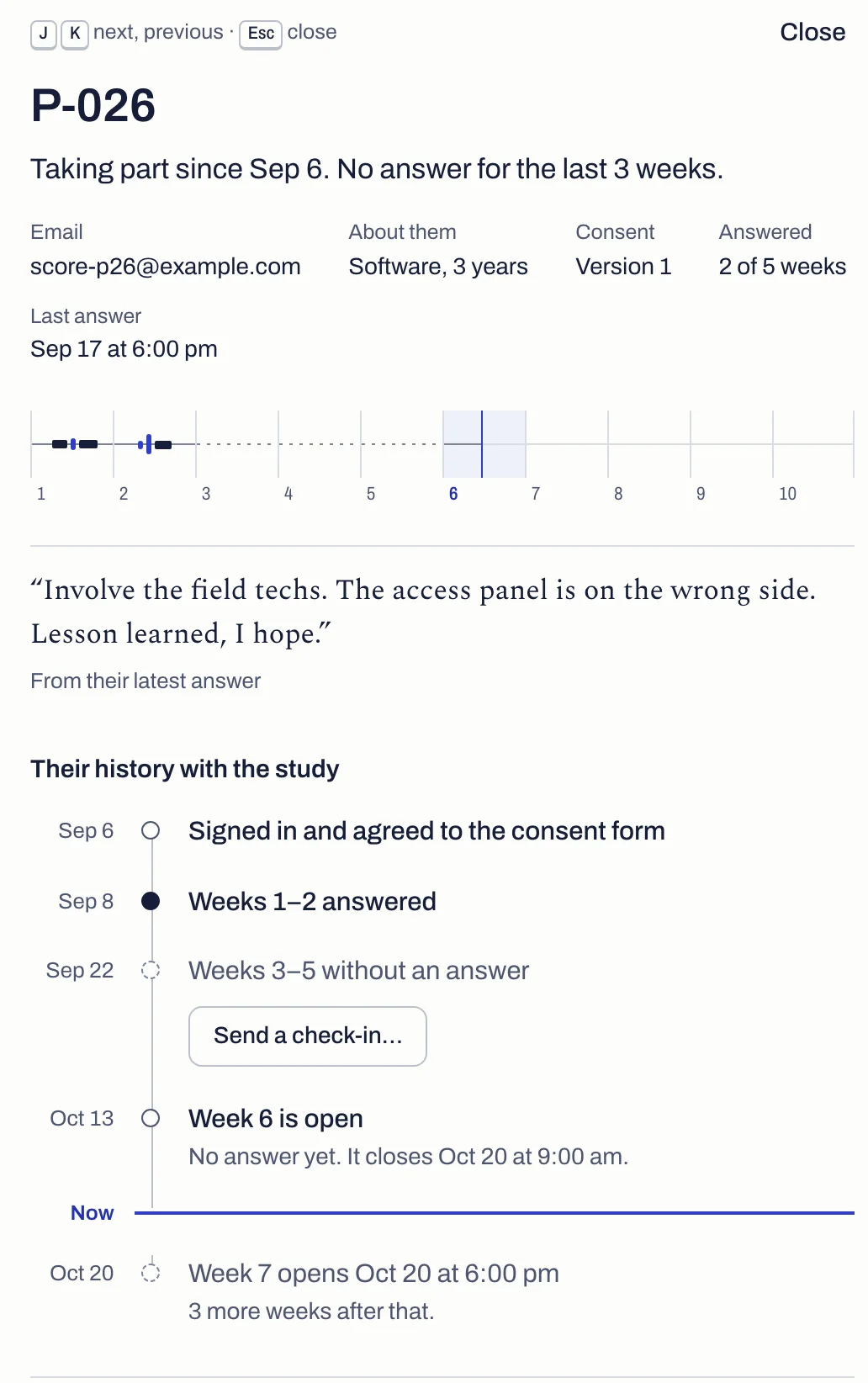
Note 2A person’s consent version is shown on their record in Figure 1.Participants read and agree to the study’s consent text before they can answer anything. When the team changes the text, it publishes a new version, and anyone who agreed to an earlier one is asked to agree to the new one before they answer again.2Note 2A person’s consent version is shown on their record in Figure 1.
Every answer is stored with the consent version its author had agreed to when they gave it, and that version travels into every export.
Recordings and messages
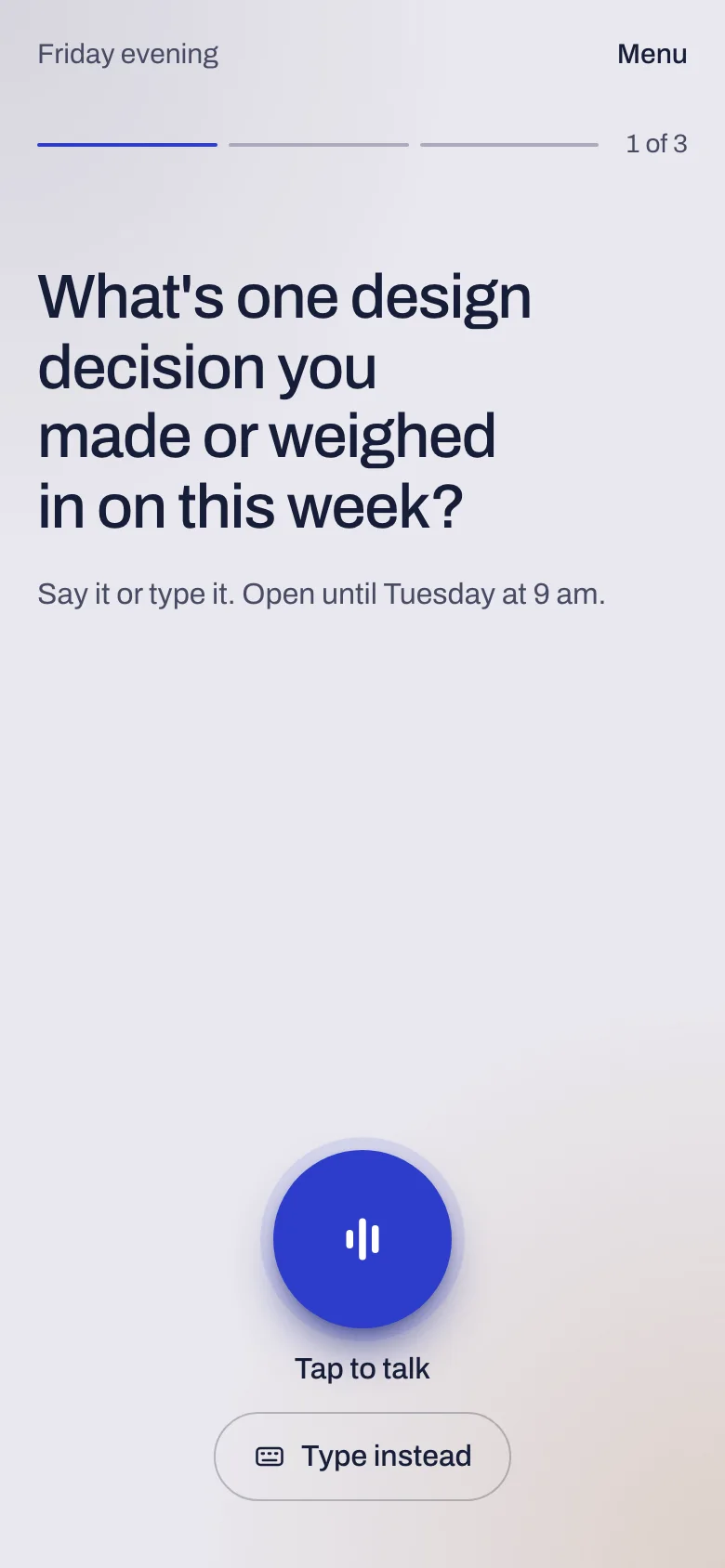
Note 3Crozier & Cassell (2016) discuss the methodological and practical questions audio diaries raise for research on work.Spoken answers are recorded in the browser. A recording stays on the participant’s device until they send it; for studies where people may answer on shared computers, the team can turn that off, so a recording is held only in the open page.3Note 3Crozier & Cassell (2016) discuss the methodological and practical questions audio diaries raise for research on work.
The email that tells a participant their questions are open names the study, how many questions there are and when they close. It never contains the questions’ words, because an inbox preview is not private.
Note 4The team transcribes exported recordings in its own workflow and adds the transcripts back as a CSV. That workflow, and where it sends audio, belongs in the study’s own review.Caracal does not transcribe recordings and does not analyze answers with AI.4Note 4The team transcribes exported recordings in its own workflow and adds the transcripts back as a CSV. That workflow, and where it sends audio, belongs in the study’s own review.
Identity and exports
Note 5Figure 2 shows answers as the team sees them: by code.Each participant gets a pseudonymous code such as P-014. The team invites people by email address and may keep its own IDs, but exports use the code, never a name. Answers export as CSV, one row per answer; recordings export as a ZIP.5Note 5Figure 2 shows answers as the team sees them: by code.

Withdrawal and deletion
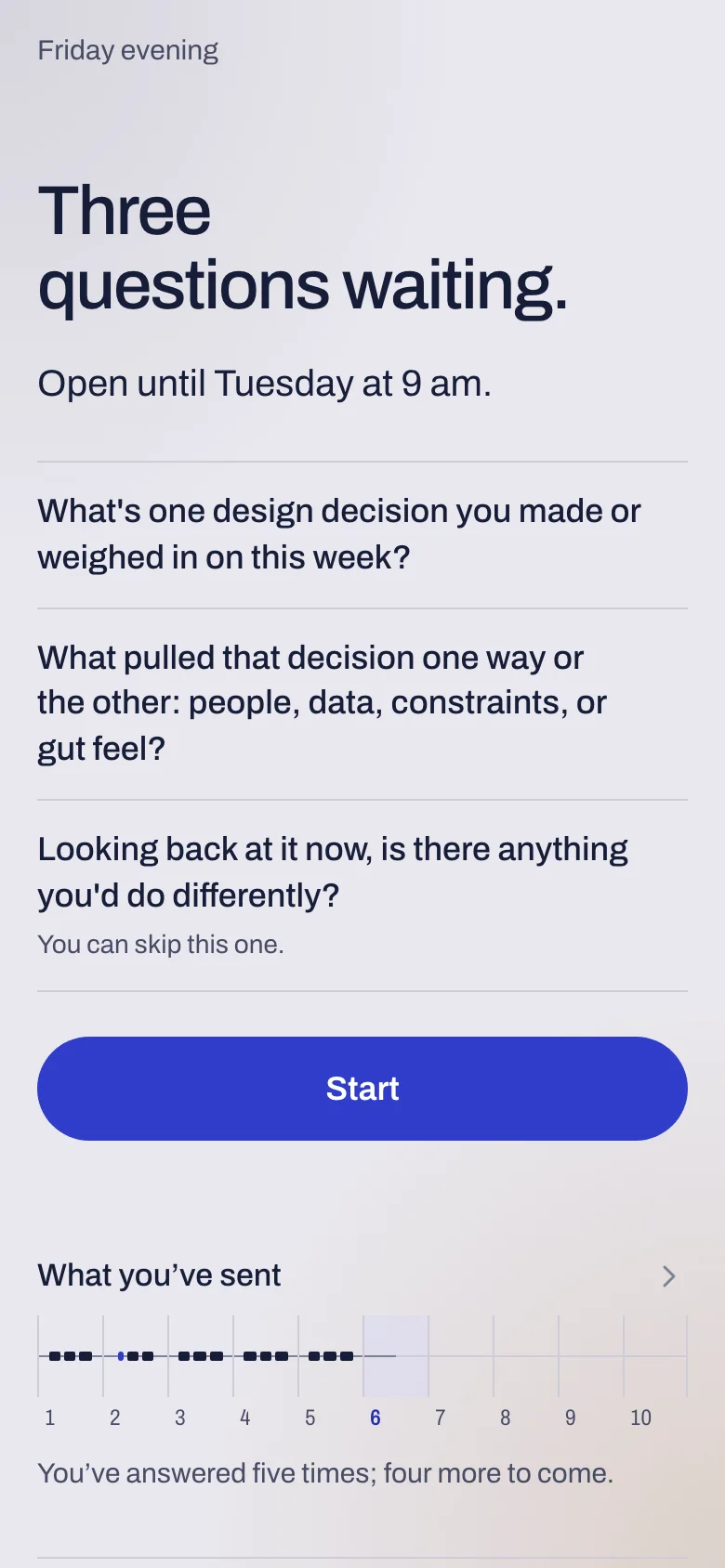
Note 6A participant’s own page links to the consent form they agreed to, the team’s contact and the study’s ethics reference. Their home is in Figure 3.A participant can stop taking part from their own page in one step, without giving a reason, and the team can withdraw someone. What they sent before stopping is kept under the study’s rules.6Note 6A participant’s own page links to the consent form they agreed to, the team’s contact and the study’s ethics reference. Their home is in Figure 3.
A participant can ask for what they’ve sent to be deleted. The request waits for the team’s decision. An approved deletion runs at the next processing cycle; a declined one carries the team’s note, which the participant can read.
What it does not claim
Caracal is in development and preparing supervised pilots. It holds no certification, including HIPAA, SOC 2 or FedRAMP, and the platform itself has not been approved by an IRB. It collects no sensor or passive data. Alongside each answer it records when it was given, the time zone the device reported, and how long the person spent on each question.
If a review needs something this page doesn’t answer, write to akatz4@vt.edu.
References
- Crozier, S. E., & Cassell, C. M. (2016). Methodological considerations in the use of audio diaries in work psychology: Adding to the qualitative toolkit. Journal of Occupational and Organizational Psychology, 89(2), 396–419. doi.org/10.1111/joop.12132